Fundraising, stewardship & sports partnerships at World Cup scale.
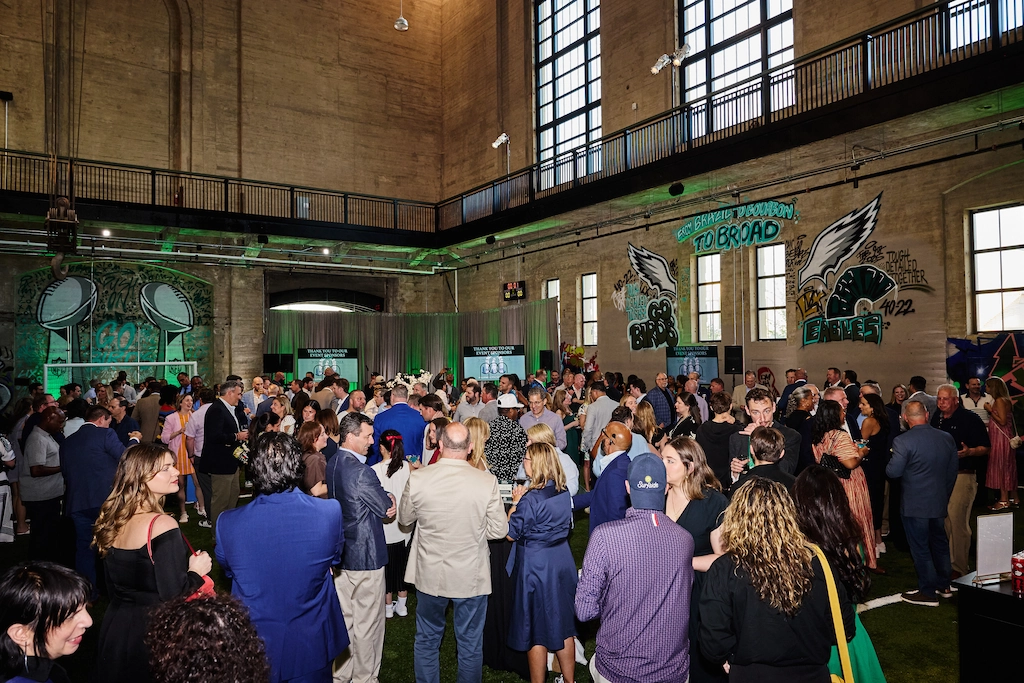
Philadelphia Soccer 2026 served as the official nonprofit Local Host Committee for the 2026 FIFA World Cup in Philadelphia, leading the region’s planning and delivery of one of the world’s largest sporting events. Governed by a 14-member board, the organization hosted six FIFA World Cup matches — including a Round of 16 match on July 4, 2026 — while advancing fundraising, community engagement, and legacy initiatives designed to benefit the region long after the tournament concluded.When we partnered with Philadelphia Soccer 2026 in 2023, the organization was still in its early stages, without the formal fundraising operations or the partnership and donor stewardship plans needed to support it. After establishing the fundraising department’s operational framework, Rowse was tasked to create the infrastructure and stewardship practices needed to support fundraising efforts, manage complex corporate relationships, and deliver the level of engagement expected by major supporters whose contributions would shape Philadelphia’s World Cup legacy.Over the course of our three-year partnership, we helped design, build, and operate Philadelphia Soccer 2026’s fundraising and donor engagement function — from implementing Salesforce CRM and developing integrated fundraising strategies to supporting the management of relationships with more than 100 corporate and philanthropic partners. We oversaw a comprehensive stewardship program that delivered premium experiences tied to the FIFA World Cup, the PGA Championship, NCAA Championships, and other marquee events, while producing signature engagement events such as Party on the Pitch for more than 250 donors, partners, and civic leaders. By the conclusion of the tournament, Philadelphia Soccer 2026 had a fully operational fundraising and stewardship ecosystem, and the partnerships, systems, and donor relationships established throughout the engagement created a lasting foundation for the organization’s legacy.
Building a global-scale fundraising operation from scratch — under World Cup pressure.
World Cup–Scale Context
Operational Gaps
Key Pressure Point
Designing, building, and operating the fundraising function .
Fundraising Strategy & Infrastructure
Corporate & Civic Partnerships
Stewardship, Hospitality & Premium Experiences
Ticketing & VIP Operations
Fundraising Infrastructure Development
Multi-Channel Fundraising Strategy
Campaign & Initiative Development
Donor Stewardship & Ticketing Operations
Cross-Functional Alignment
What makes fundraising for a FIFA World Cup host city different from standard nonprofit fundraising is that scale, speed, and stakeholder complexity all arrive at once. Philadelphia Soccer 2026 was responsible for six matches, a FIFA Fan Festival, and more than 3,000 volunteers, coordinating statewide stakeholders across the Commonwealth while a global audience turned its attention to Philadelphia.
Speed defined everything. The fundraising infrastructure had to be operational within months, not years, because World Cup–related activity was already underway and every month without systems meant lost opportunity. Rowse built the operation to run at volume from the start — donor management, gift processing, giving programs, and reporting, all designed to scale.
Stakeholder complexity set the work apart. Corporate partners, FIFA, board members, individual donors, and community supporters each required a different stewardship approach. Rowse worked with government officials and counties across the Commonwealth to establish partnerships and Fan Zones so communities statewide could take part in the 2026 FIFA World Cup.
Stewardship at this scale is continuous, not a closing step. Matches, hospitality, VIP touchpoints, and adjacent events such as the PGA Championship all require coordinated delivery. Ticketing becomes infrastructure in its own right — senior-level coordination on funder allocations, fulfillment workflows, and a dedicated team to execute against them. This is where sports corporate partnerships sit: at the intersection of nonprofit fundraising discipline and sports-business operations, a vertical few firms operate in.
Rowse’s work with Philadelphia Soccer 2026 demonstrates what it takes to build fundraising infrastructure capable of supporting a global event — and why organizations cannot afford to wait until demand arrives to start building.
Philadelphia Soccer 2026 strengthened its donor engagement and stewardship program throughout our partnership. Through signature experiences like Party on the Pitch, personalized hospitality programs, and a dedicated approach to white-glove donor service, the organization enhanced the experience for supporters throughout the FIFA World Cup cycle and across other premier sporting events.
Philadelphia Soccer 2026 was positioned to cultivate and steward corporate partners, major donors, and community supporters at a scale few organizations have the opportunity to achieve. The systems, experiences, and relationships established through this work had created a platform for long-term engagement — allowing the organization to strengthen partnerships, deepen donor loyalty, and extend once-in-a-generation World Cup connections into enduring philanthropic relationships well beyond 2026.
Frequently asked questions.
- What is Philadelphia Soccer 2026?
Philadelphia Soccer 2026 is the official 501(c)3 Local Host Committee for the 2026 FIFA World Cup in Philadelphia, governed by a 14-person board and responsible for planning and executing the tournament in coordination with the City of Philadelphia. It hosted six World Cup matches — including a Round of 16 match on July 4, 2026 — while advancing local soccer growth, inclusive community programming, and a lasting regional legacy beyond 2026.
- How did Rowse Consulting help Philadelphia Soccer 2026?
Over a three-year engagement, we built that system from the ground up, implementing Salesforce CRM, developing integrated fundraising strategies, and managing relationships with more than 100 corporate and philanthropic partners. We also designed and delivered a comprehensive stewardship program that connected donors and partners to marquee experiences across the FIFA World Cup, PGA Championship, NCAA Championships, and signature events like Party on the Pitch.
By the end of the partnership, Philadelphia Soccer 2026 had a fully operational fundraising and stewardship ecosystem, with the systems, relationships, and engagement strategy in place to support both the tournament and its long-term legacy.
- What makes fundraising for a major sporting event different from standard nonprofit fundraising?
The biggest difference is that you build the plane while flying it: the fundraising operation must be built before the event, not during, because demand peaks on a fixed, immovable deadline. Stakeholders are far more complex — corporate, civic, individual, and international audiences all at once — and the scale of visibility is global. That combination demands the operational capacity to manage high-volume, multi-channel activity from day one
- What does donor stewardship look like for a major sporting event?
Stewardship at this scale is a continuous operational function, not a closing step. It spans ongoing ticket allocation across matches, hospitality experiences, VIP management, and donor presence at adjacent sporting events such as the PGA Championship. Delivering it well requires a dedicated team coordinating closely with senior leadership throughout the event cycle.
- Does Rowse Consulting work with sports organizations on partnerships and ticketing?
Yes. Rowse’s work with Philadelphia Soccer 2026 included leading corporate partnership execution, ticketing fulfillment, and donor hospitality at World Cup scale. Sports organizations are a core part of the firm’s practice, served through its corporate partnerships, stewardship, and ticketing work.
- How can nonprofits benefit from the 2026 FIFA World Cup in Philadelphia?
A global event brings a surge of visibility and donor interest, along with corporate partnership opportunities tied to World Cup sponsors and lasting legacy programming. The organizations that benefit most are the ones with fundraising infrastructure ready before demand peaks — because the opportunity arrives on the tournament’s schedule, not yours.